





Token facts
What holders should know
Plain answers about Axolots ($AXOLOTS). Every number says where it comes from.
How it works
Axolots is a token on a Meteora bonding curve with a transfer hook of its own. The hook runs inside every swap, so the token itself keeps a list of axolotls for each holder, on chain, with nothing stored anywhere else.
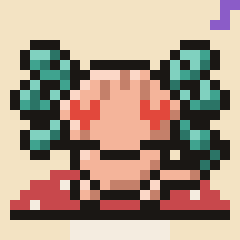
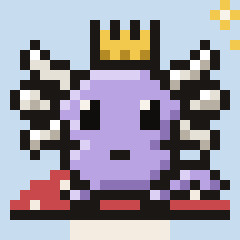
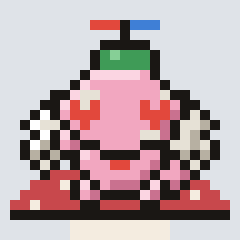
Every whole token bought on the curve lays an egg in your stable. One slot later it hatches into a 24 × 24 pixel axolotl, drawn by the program itself from that slot's hash, so nobody sees an axolotl before it is bought (how traits are drawn). Sell or send, and the axolotls your balance no longer covers go (what burns an axolotl). When the curve fills, the pool graduates and no egg is laid again.
Addresses
- Token (CA)
- after launch
- Program
- Program state
- Art account
- Curve pool
- after launch
Supply
10,000 tokens with 6 decimals (by design). One whole token backs one axolotl. The curve sells about 8,000 of them (sample) and the rest seeds the graduated pool, so there can never be more than about 8,000 axolotls.
While the curve runs the pool holds a little extra (about 127 tokens (sample)) that it burns when it graduates; the supply then settles just under 10,000. Nobody can mint more: the mint has no mint authority, and its metadata cannot be changed.
The curve
The curve opens at 0.00265625 SOL per token and graduates when 85 SOL is raised, at about 0.0425 SOL per token (sample). The live values appear here once the pool exists.
Buys are capped at launch: 25 tokens at first, growing by 0.3 tokens every second (by design), and never more than 100 in one buy (sample). Team wallets are exempt and lay no eggs.
Fees
The curve charges a fee in SOL on every buy and sell: 10% at the opening, falling in 10-second steps to 1% after the first hour (sample). Fees go to the project; none is ever charged in tokens, so no fee can lay or burn an axolotl. After graduation the pool's fee is 1% (sample).
How traits are drawn
Your buy lays an egg and records the slot it landed in. That slot's hash does not exist until the slot ends, so nobody, the buyer included, can see the traits before buying, or buy, look and undo. Anyone can hatch the egg from the next slot on: the program reads the hash from the SlotHashes sysvar and rolls 18 trait bytes from it, the mint and the egg's id.
What it does not protect against: the validator that produces a slot has some influence over that slot's hash. The sysvar keeps only recent hashes, so an egg nobody hatches within about 3.4 minutes (by design) hatches bare: background, colours and base layers only, no pattern, cheeks, item, hat, friend or mood. This site and its keeper hatch eggs within seconds to a minute.
What burns an axolotl
Your axolotls are a list kept for your token account. When tokens leave that account and its balance no longer covers the list, the axolotls at the end of the list are burned: a sell, a send to a wallet with no open stable, a burn of tokens. Sends to a wallet with a stable move them instead. Put favourites first on your collection page; you can also pin exact axolotls to a send.
At graduation the hook is switched off for good: no egg is laid again, ever. Plain transfers stop moving axolotls, and anyone can prune axolotls whose balance is gone. The collection only shrinks from then on.
The art
Every pixel lives on chain in a locked art account; a render instruction returns the same 24 by 24 image this site draws. The art account is not uploaded on this cluster yet.
Where it trades
This site has no swap. While the curve runs, swap apps and aggregators may not route this pool: the hook needs accounts most of them do not pass. A buy lays eggs only into a token account that already has a stable, so after your first buy open one on the collection page. After graduation the token trades on a regular pool that aggregators route.
Not affiliated with Meteora. The curve and the graduated pool run on Meteora's open programs, which this project uses like anyone can.